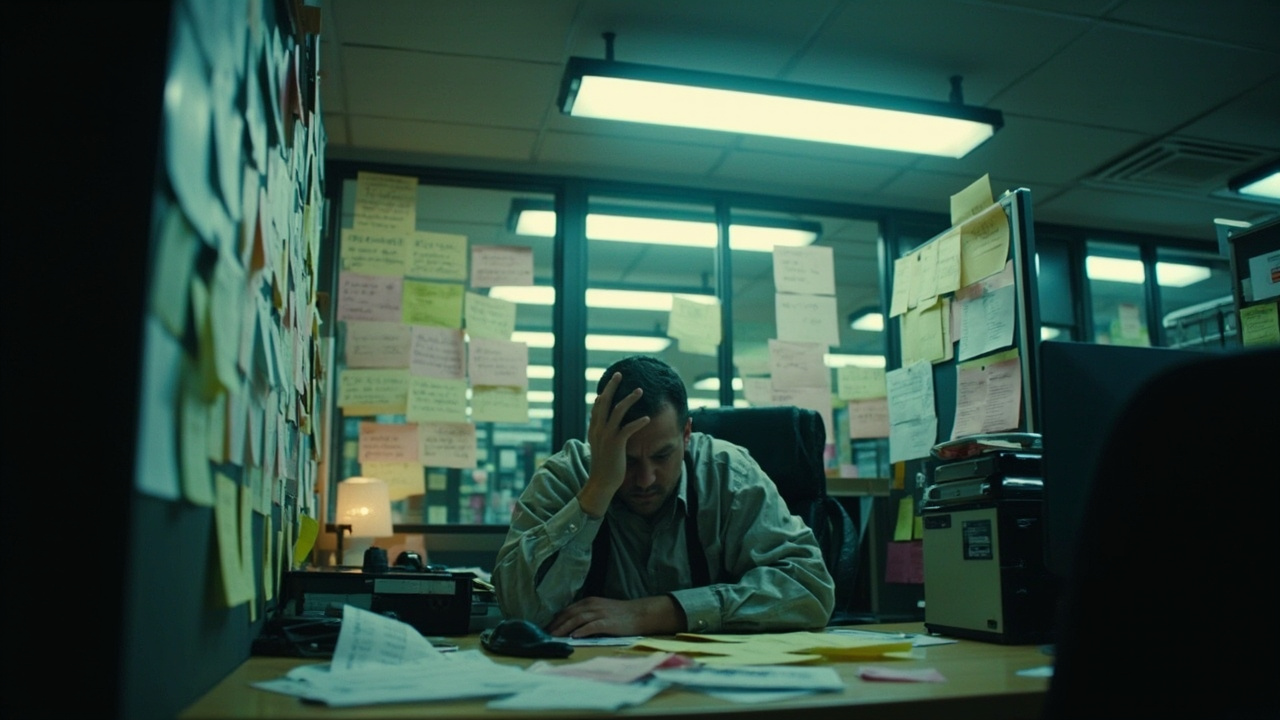
The job market is a strange place right now. Graduates can't crack entry-level roles. Veterans with decades of experience are getting rejected. AI keeps showing up in every conversation about job security. Raises and promotions aren't guaranteed for top performers anymore—and some companies are cutting staff while posting record profits.
"Corporate Absurdity" is an account that exists in this chaos. It posts memes about work life that are painfully relatable. The kind that make you send them directly to your boss, HR, or your work besties. (Though the meeting you just sat through probably could have been an email, so maybe reconsider before hitting send.)
At a glance
- "Corporate Absurdity" shares memes about real workplace frustrations
- The memes resonate because they capture specific, recognizable moments
- Topics include overqualified applicants, visibility politics, and AI in hiring
- The feed has gained a following among workers who need to laugh through the pain
Why these memes hit so hard
These memes work because they name something everyone experiences but nobody talks about openly. The content doesn't pretend the corporate world is fine. It acknowledges the absurdity directly.
A New York Times piece on the hiring landscape noted that AI has been evaluating job candidates for over a decade. Now it's being supercharged with additional surveillance layers. The article described a vicious cycle: employers buy new AI tools, applicants learn to game them, employers buy newer tools, and so on. It's become a futile "Spy vs. Spy" showdown instead of actually helping qualified people find jobs.
The piece also highlighted that employers are raising expectations because they're flooded with applications. HR experts report corporations are asking for more qualifications because they can afford to be picky. The market favors employers, not workers.
The visibility trap
One expert, Ruth Gotian, wrote something many workers have felt but rarely see articulated: excellence alone doesn't get noticed. "Your work no longer speaks for itself. You must speak for it," she noted in Psychology Today.
This creates a frustrating dynamic. High performers often underestimate their abilities and feel awkward about self-promotion. They assume quality work will naturally be recognized. Meanwhile, less skilled colleagues frequently overestimate themselves and put their names forward constantly.
The outcome: those who communicate their achievements advance faster, regardless of actual performance. This isn't fair, but it's the reality in many workplaces.
Our analysis
These memes succeed because workplace frustration is universal. Almost everyone has sat through a pointless meeting, received vague feedback, or watched an unqualified coworker get promoted.
"Corporate Absurdity" works by capturing specific moments rather than generic complaints. The specificity makes them shareable. Workers screenshot and send them to colleagues who understand the reference without explanation.
For readers here, this content serves a real purpose: validation. Laughing at shared suffering creates community. When your own work experience feels isolating, finding hundreds of people who've lived the same absurdity helps.
A practical example
Say you've spent three months on a project that got canceled. Your manager barely acknowledged it. Instead of suffering in silence, you find a meme about pointless corporate projects and share it with a trusted colleague. Within minutes, five people have replied with their own versions of the same story. You're not crazy. The system is broken.
What to watch next
Expect more workplace content as economic anxiety persists. Laughing at shared misery is a coping mechanism, and accounts that nail specific frustrations will keep growing. Watch for AI-related content to increase as more workers experience automated performance reviews and AI hiring tools.
The bottom line: workplace memes are having a moment because work itself feels increasingly absurd. That tension isn't going away soon.
Key takeaways
- Workplace memes resonate because job frustration crosses every industry and level
- Specific, recognizable moments outperform vague complaints every time
- The gap between competence and visibility drives much of the resentment these memes capture
- Laughing at shared suffering creates community among isolated workers
- AI in hiring has created a cycle that frustrates both employers and applicants
Frequently asked questions
What is "Corporate Absurdity"?
A social media account that shares memes about the frustrating realities of office and corporate life, from pointless meetings to unfair promotion practices.
Why do these memes resonate so much?
They capture specific workplace situations that employees immediately recognize from their own experiences, making the frustration feel shared rather than isolated.
What did experts say about career advancement?
Research indicates visibility matters as much as competence. Employees who actively communicate their achievements often advance faster than those who simply work hard.
How is AI affecting job searching?
Reports indicate AI is evaluating job applicants while job seekers use AI to game those systems, creating an ongoing cycle rather than effectively matching qualified people with jobs.
What makes these memes different from general humor?
The specificity sets them apart. Rather than vague jokes about work, they reference exact situations that trigger recognition in people who've lived them.
Inspired by reporting from: boredpanda.com