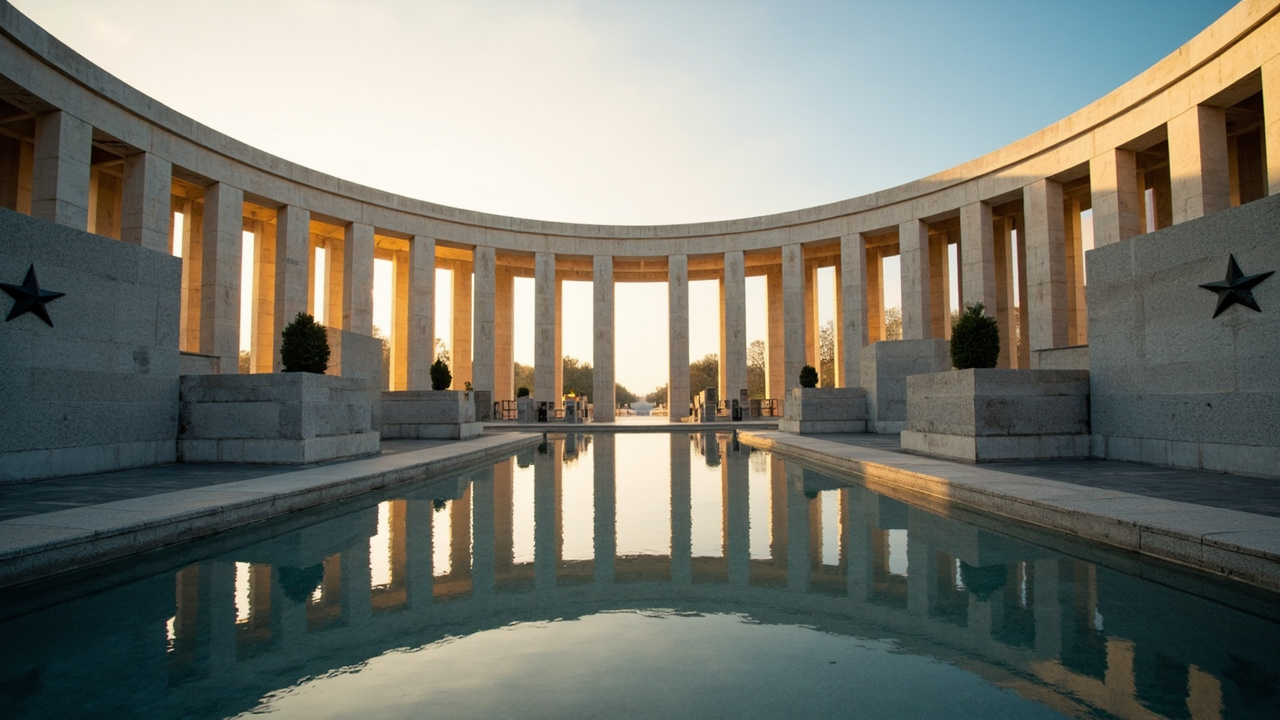
A 41-year-old Kentucky woman named Melissa Farris livestreamed herself vandalizing the World War II Memorial in Washington, D.C., on August 13. In one of the videos, she asked her viewers to edit the footage and "make me look fancy." Within days, she had been charged with two federal offenses and remained in custody ahead of a preliminary hearing.
According to Bored Panda's reporting, U.S. Park Police were called to the memorial at around 2 p.m., but Farris had already fled before they arrived. She later turned herself in at a federal courthouse in Alexandria, Virginia.
What happened
- Defendant: Melissa Farris, 41, of Elizabethtown, Kentucky
- Online alias: Melissa Lovewell
- Date of vandalism: Thursday, August 13
- Charges: two federal offenses, including destruction of a veterans' memorial
- Status: in custody ahead of a preliminary hearing scheduled for August 17
What the livestream actually showed
Video posted from Farris's social media accounts shows her pouring foam into a fountain at the memorial's Atlantic Pavilion. In the same clip, she tags a stone wall with the words "Clean Hands Dirty $" in orange paint. Green and pink paint are visible across the ground nearby. The footage comes from her own livestream.
In a follow-up video posted at 3:58 p.m., she asked her viewers to edit the footage and get it "all over the internet." She also asked, "Why the f*** didn't I get arrested? You don't think that's weird?" and, separately, that no one had stopped her from damaging federal property.
She then broadcast herself entering a federal building in Alexandria, Virginia, on camera. From there, the case was moved to Washington, D.C.
The context she offered for her actions
In pre-vandalism livestreams, Farris said she was "cognitively aware" of her choices and described the act as an attempt to push an unspecified whistleblower case into a courtroom. She also went after the U.S. Department of Justice in her videos, claiming that law enforcement owed her money over what she described as $2.6 billion in misconduct and miscellaneous "incidentals."
In other posts, she identified herself as a "homeless freedom fighter" and said she was under federal wiretap surveillance. In the same recordings she alleged that people on a golf cart had been targeting her Kentucky house from the neighboring lot, and told viewers she had run for her life. A separate clip caught her doing a "dance party" on the White House sidewalk and talking about "planning the revolution."
The response from officials
U.S. Attorney for D.C. Jeanine Ferris Pirro publicly denounced the act, calling it a desecration of a monument honoring those who fell defending the country. President Donald Trump described the episode as a personal affront to servicemembers who died in the war. Trump's social media post, reported by Bored Panda, named Farris directly and framed her act as disrespecting American military dead.
Our analysis: the spectacle of self-incrimination
Farris did not just vandalize a memorial. She produced the footage, edited the framing, and then turned herself in on her own livestream. That sequence makes the case unusually straightforward for prosecutors and unusually strange for the public.
It is also a reminder that livestreamed crimes do not age well. The same platform that gives the accused a voice also gives prosecutors a clean exhibit. Farris's own posts are now part of the public record of her alleged offenses.
There is also a political layer here that matters even if you ignore the spectacle. Trump publicly clashed with U.S. Attorney Pirro earlier this month after her office dropped charges against a man accused of damaging the Lincoln Memorial Reflecting Pool. That dispute put the office under the spotlight. A second high-profile memorial case landing in the same jurisdiction, days later, is not a coincidence of timing. Watch whether the case moves at the speed of the first one, or much faster.
Say you cover or follow this kind of story
Resist the urge to treat the livestream as entertainment. The video is evidence in a federal case, and the person in it is presumed innocent until proven otherwise. Use the official charging documents and court filings as the spine of any coverage. If you want context, look at the sentencing range for prior convictions under the same statute, not at the most viral clip.
A quick gut-check before sharing: did the source post the actual court filing, or just the livestream? The first is news. The second is just content.
Bottom line
The criminal case will be settled in a courtroom, not a livestream. Watch the preliminary hearing and the federal charging documents, not the videos.
Key takeaways
- Farris livestreamed the vandalism, asked viewers to share it, and turned herself in on camera.
- She faces two federal charges, including destruction of a veterans' memorial.
- Her stated motive, an unspecified whistleblower grievance, has not been substantiated.
- The case lands in a U.S. Attorney's office already in a public fight with the President over memorial damage.
Frequently asked questions
Who is Melissa Farris?
Melissa Farris is a 41-year-old Kentucky woman who livestreamed her own vandalism of the WWII Memorial in Washington, D.C., on August 13.
What charges does she face?
She faces two federal offenses: willfully injuring or committing depredation against U.S. Property, and destruction of a veterans' memorial.
Why did she livestream the act?
In her own videos, Farris described it as part of a whistleblower effort and asked viewers to share the footage widely.
Where is the case being heard?
Her case was transferred to Washington, D.C., where she remained in custody ahead of a preliminary hearing scheduled for August 17.
Inspired by reporting from: boredpanda.com