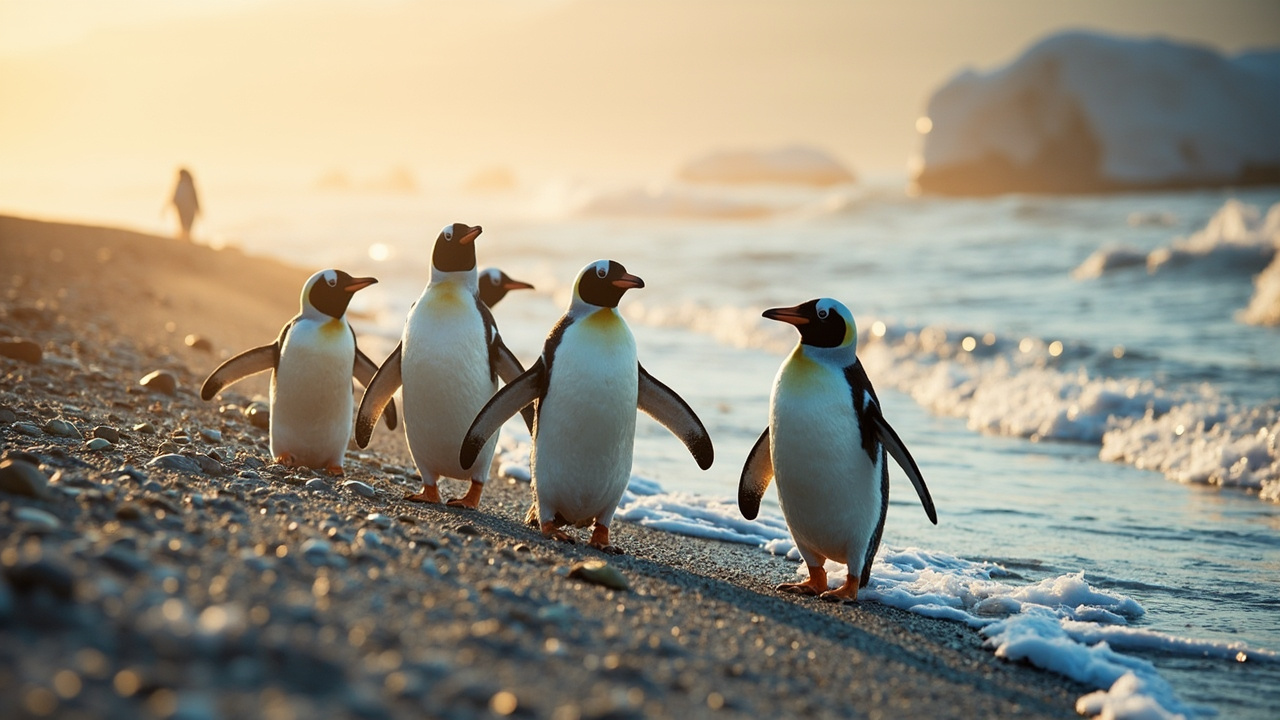
Scientists have finally cracked a century-old mystery hiding in plain sight. What the world knew as a single penguin species is actually four distinct creatures, and one of them has spent all this time completely overlooked on a remote patch of islands in the Indian Ocean. This isn't just a taxonomic tweak—it's the first new penguin species formally named in over a hundred years.
The research, led by teams from Chile and the University of California Berkeley, relied on genetic analysis to separate birds that look nearly identical to the untrained eye. If you grew up thinking gentoos were just gentoos, it's time to meet the family.
How the Birds Stayed Hidden
For generations, birdwatchers and researchers alike recognized the gentoo by its bright orange bill and the white patch stretching across its head. The problem? Looks only get you so far. The four populations—northern, southern, eastern, and southeastern—each live thousands of miles apart. Northern gentoos hang around the Falkland Islands. Southern gentoos are the only ones calling Antarctica home. Eastern gentoos occupy islands like Crozet and Macquarie. And the newcomer, the southeastern gentoo, lives on the Kerguelen Islands.
These islands sit nearly 2,000 miles from the nearest permanently inhabited land. The French call them the Desolation Islands, which tells you everything about how easy they are to visit. When researchers finally made the trip and collected samples, the genetic data painted a picture that physical observations never could.
The birds differ slightly in size and the sounds they make, but to the casual observer, they look interchangeable. Scientists call this a cryptic species—organisms that look nearly identical despite having meaningful genetic differences. Without DNA analysis, this particular penguin would have stayed invisible.
Why Now, and Why It Matters
Researchers have argued about gentoo classification for years. According to the study team, no penguin species has sparked more taxonomic debate. What changed was the scale of the genetic sampling. By analyzing DNA from penguins spanning multiple continents and ocean regions, the researchers could finally trace how the populations diverged over time.
Gentoos return to the same nesting spots year after year. Over thousands of years, birds on far-flung islands stopped mixing genetically. Each group evolved along its own path, even if that path never produced obvious physical differences.
The findings carry a conservation warning. Two of the newly recognized species live in vulnerable sub-Antarctic regions where climate change is reshaping coastlines and food supplies. The southern gentoo, now formally called Pygoscelis ellsworthi, may actually expand its range as temperatures rise. But the others face an uncertain future. "It's very important that conservation institutions in all the different countries involved recognize and take appropriate action," said research team member Juliana Vianna.
| Species | Range | Status Outlook |
|---|---|---|
| Northern gentoo | Falkland Islands | Potentially vulnerable |
| Southern gentoo | Antarctica | May expand northward |
| Eastern gentoo | Crozet, Macquarie Islands | Potentially vulnerable |
| Southeastern gentoo | Kerguelen Islands | Faces uncertain future |
This matters because conservation funding follows species counts. A single "widespread" gentoo penguin looked secure. Four separate species with isolated island populations? That's a much more fragile picture—and it demands a coordinated international response across Chile, France, South Africa, and other nations governing sub-Antarctic territories.
Bottom Line
The southeastern gentoo penguin is officially the newest member of the bird family, and it got here on genetics alone. The discovery highlights how much remains hidden in plain sight, even with creatures we've studied for years. Watch for follow-up research on how climate change will affect the newly split species differently—and for more taxonomic revisions as DNA testing becomes standard practice.
Key takeaways
- Gentoo penguins are now classified as four separate species, not one
- The southeastern gentoo lives on the remote Kerguelen Islands
- Only DNA analysis revealed the distinction—this is a cryptic species
- Two of the four species face climate-related threats in sub-Antarctic regions
- International conservation coordination will be essential
Frequently asked questions
What is the new penguin species called?
It's called the southeastern gentoo penguin, with the scientific name Pygoscelis kerguelensis.
Where does the southeastern gentoo live?
It lives on the Kerguelen Islands in the Indian Ocean, nearly 2,000 miles from the nearest permanently inhabited land.
How did scientists know the new species was different?
Genetic analysis of 64 penguins from colonies across the Southern Hemisphere showed clear differences between the four populations, even though they look nearly identical physically.
Is the new penguin species at risk?
Researchers say two of the four newly recognized species could face threats from climate change, particularly those living in the sub-Antarctic island regions.
When was the last time a new penguin species was named?
This is the first new penguin species formally identified in over a century.
Inspired by reporting from: boredpanda.com, sciencedaily.com