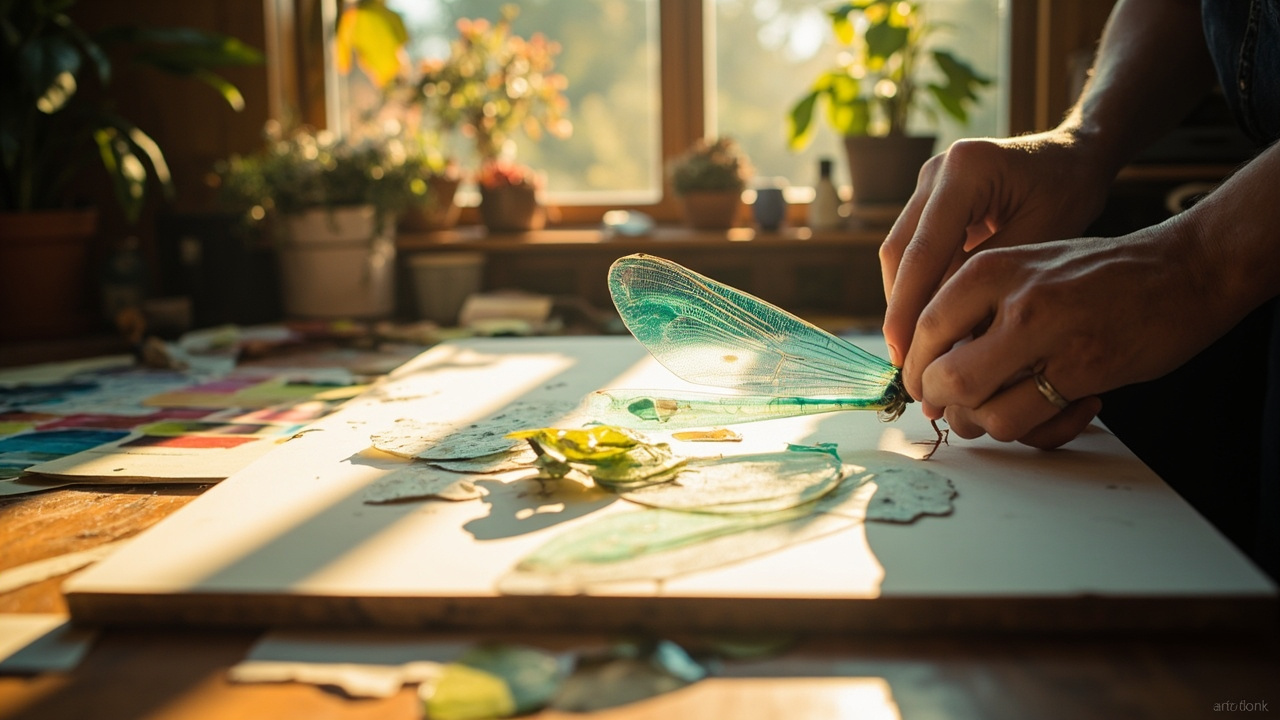
There is a specific kind of internet art where animals get fused into creatures that should not exist, and the artist Ingo has built a reputation on it. His latest work includes something unexpected: the step-by-step edits that produced each finished mashup. That behind-the-scenes look feels particularly relevant now, when AI tools can generate unusual imagery in seconds. Ingo's work offers a glimpse at a very different approach—where parts of different photographs are carefully selected, reshaped, repositioned, recolored, and blended together by hand in Photoshop.
Why showing the steps matters
AI image tools have made one-step generation easy. A weird creature used to require hours of selection work, color matching, and edge cleanup. Ingo's process makes that work visible again.
It matters because the final image lands differently once you have seen how many separate photos went into it. You notice the lighting inconsistencies he smoothed out, the edges he refined, the color palette he unified. The joke is still there—but now you also see the craft underneath it.
Ingo shares short timelapse versions of his edits on social media, and longer breakdowns on YouTube for viewers who want the full story from start to finish.
Who should care
Curious viewers:** The mashups are entertaining finished products, but the step-by-step images turn the viewing into something else—a puzzle you see being solved.
Digital artists:** The workflow is straightforward in concept: select, reshape, reposition, recolor, blend. Seeing it applied to something this playful can refresh approach to technique.
Anyone tired of AI-generated imagery:** These edits are recognizably human. Every inconsistency resolved, every choice made, every element sourced from an actual photograph—it's a process that AI currently cannot replicate, and seeing it unfold is part of the appeal.
The workflow in brief
Ingo's process follows a recognizable pattern: source photos are chosen for compatible lighting and color temperature, specific elements are isolated using selections, those selections are reshaped and repositioned, colors are adjusted to match across elements, and finally everything is blended with attention to edges and transitions.
The more elements stacked into one creature, the stranger the result—but also the more opportunity for mismatches that need fixing.
What to watch next
More artists are likely to share their step-by-step work publicly. The format lets audiences see how things get made, not just what gets made, which has become more valuable as generation tools have made finished outputs easier to produce.
Ingo's work continues on Instagram, his website, and YouTube.
Bottom line
Weird art is entertaining. Weird art with receipts—showing how the weirdness actually happened—is something else. Ingo's edits remind viewers that the process is still worth watching, even when the tools have changed.
Key takeaways
- Ingo's creature mashups are built by hand in Photoshop from multiple source photos.
- He posts step-by-step edits alongside finished images, making his process visible.
- The reveal changes how audiences experience the finished creature.
- The hand-built process is the differentiator, not the output alone.
- Process content has become its own genre as AI-generated imagery has grown.
Frequently asked questions
Who is Ingo?
Ingo is a digital artist known for combining parts of different animal images into bizarre mashup creatures.
How does he make the creatures?
By hand in Photoshop, using parts selected, reshaped, and blended from separate source photos.
Can I see the step-by-step process?
Yes. He posts short timelapse edits on social media and longer breakdowns on YouTube.
What makes this different from AI-generated imagery?
Every element in Ingo's creatures comes from an actual photograph. The process—selecting, reshaping, repositioning, recoloring, blending—is entirely manual and visible.
Where can I follow his work?
Instagram, his website (spiel-sinn.design), and YouTube.